
Character and Mascot Science
Why characters and mascots can work: the research, five public case studies, practical design lessons and clear limits on the evidence.
Why characters can make brands and places easier to remember
Characters and mascots can help people recognize a brand, follow a story and build familiarity over time. Their value depends on more than an appealing drawing: a distinctive identity, a clear role and worthwhile experiences give people reasons to remember them.
At Livelier Memories, we use “Character and Mascot Science” to describe an evidence-informed approach to character creation and development. It brings together research on recognition, storytelling, anthropomorphism and audience relationships. It is our creative framework, not the name of a validated scientific discipline or a promise of business results.
Our starting question is simple: what could this character help people notice, understand, enjoy or take part in?
Clearly fictional characters are a design choice: useful information and enjoyment do not require pretending to be a real person. Our design ambition is to make generative interactions engaging and memorable through clearly fictional characters, without pretending to be human. The character is the familiar face; the managed programme maintains consistent reviewed content and experiences across guides, stories, email content and keepsakes. Interactive capabilities are scoped separately, not all live or included. Evidence varies by audience, context and task; this is not a universal claim that animal characters outperform human characters or are automatically trustworthy.
What is the difference between a character and a mascot
For this article, a character is a designed personality with a recognizable identity, behavior and potential role in stories. A mascot is a character that represents an organization, team, brand, place or cause. The categories overlap: a mascot can develop a rich story world, and a story character can become an organizational symbol.
The research below examines several relevant mechanisms. The public examples then show how those ideas appear in practice, with a clear distinction between experimental findings, brand accounts and our creative interpretation.
1. A personality gives people something to understand
A curious bird, a determined mountain or a quietly mischievous shop mascot can have a recognizable point of view. People can understand its intentions without mistaking it for a real person.
Psychologists call the attribution of humanlike intentions or emotions to nonhuman entities anthropomorphism. Epley, Waytz and Cacioppo’s influential theory explains why this varies with context, motivation and the knowledge people bring to an encounter. It does not suggest that everyone responds identically to every character. Read the research on anthropomorphism.
Our design application is to give the character a small set of understandable traits and let those traits guide its behavior. A cautious explorer should approach a new trail differently from an impatient adventurer. Personality becomes useful when it changes what the character does, rather than remaining a list of adjectives in a presentation.
2. Recognition needs a link back to the brand
A memorable character is only a useful brand asset if people connect it to the right organization or place.
The Ehrenberg-Bass Institute’s work on distinctive assets emphasizes two questions: how many people associate an asset with the brand, and how exclusively does it evoke that brand? Characters can serve this role alongside colors, shapes and other identifying elements. An unfamiliar design needs exposure and clear brand linkage before it can work independently. Read the Institute’s explanation of distinctive assets.
For a character, we would test the silhouette, proportions, palette and signature features across actual uses: a small social image, a visitor map, an animation frame or a souvenir. Looking different is a starting point. Being correctly recognized is the outcome to measure.
3. Stories can make information easier to remember
A destination has facts. A character can give visitors a reason to explore them.
In a 2021 meta-analysis, Mar and colleagues found that narrative texts were, on average, better remembered and understood than expository texts across the studies they analyzed. This is evidence about reading and comprehension, not proof that adding a mascot to a campaign will increase sales. Read the narrative memory meta-analysis.
Our creative application is to organize information around a goal, a discovery and a consequence. Instead of placing a character beside a list of landmarks, a story might follow it trying to find the source of a harbor’s unusual sound. Each stop can introduce something real about the place.
Fiction should be recognizable as fiction. Historical details, local traditions and practical visitor information still need checking with knowledgeable people.
4. Familiar characters can become emotionally meaningful
Audiences sometimes develop a continuing, one-sided sense of connection with a media figure or fictional character. Researchers describe this as a parasocial relationship.
A 2020 meta-analysis by Tukachinsky, Walter and Saucier synthesized 120 studies on these relationships. It found associations with audience involvement and persuasive outcomes, among other factors. Those associations do not establish that a new brand mascot will create affection, loyalty or purchases. Read the parasocial relationship meta-analysis.
Our practical emphasis is earned familiarity: a character with an understandable outlook, recurring interests and a role worth returning to. It might celebrate a visitor’s discovery or make a complicated topic more approachable.
The ethical boundary matters. Characters should not simulate obligation, pressure children to buy or imply that a commercial relationship is a substitute for human care.
5. Consistency helps familiarity, but repetition has limits
People need opportunities to encounter a character. They also need those encounters to be worth their attention.
Montoya and colleagues’ meta-analysis examined how repeated exposure relates to liking, recognition and familiarity. Its findings included an inverted-U pattern under several conditions: more exposure did not produce endlessly increasing liking. Effects varied with the stimulus and how it was presented. Read the repeated-exposure research.
Our working principle is a consistent identity with varied situations. Keep the features and voice that make the character recognizable. Give it new questions, environments, expressions and useful things to do.
That might mean one character appearing in a welcome film, a rainy-day guide and a seasonal adventure. Producing hundreds of assets is not itself a strategy. Each asset needs a purpose, a suitable audience and a reason to exist.
6. Participation can give a character a place in a community
A character can appear in a shared ritual: a match-day welcome, a school celebration, a visitor challenge or an annual neighborhood event.
Muñiz and O’Guinn’s foundational research on brand communities identified shared consciousness, rituals and traditions, and responsibility toward other members. Their study examined particular brand communities, not a universal formula for building one with a mascot. Read the original brand community paper.
For us, the opportunity is to design participation rather than merely request attention. People might follow a discovery trail, contribute a story with permission or celebrate completing an activity together. These are ideas to test with the community involved.
A destination character should make room for local voices. It should not flatten a living culture into a costume or invent traditions on its behalf.
Five public examples at a glance
These independently selected examples are not Livelier Memories clients or endorsements. They show different kinds of success and different strengths of evidence. The explanations of why they may work are our interpretations unless a study directly tested the mechanism.
The lesson is not that every mascot should behave the same way. Recognition, learning, participation and sales are different outcomes and require different tests.
What the public cases actually show
Michelin Man makes the product part of the identity
Evidence type: Brand archive
A distinctive tire-built identity that has supported many roles over time.
Practical lesson. Decide which features must remain recognizable before creating more versions. A brand can vary the story without making its character look unrelated from one appearance to the next.
Limit. Longevity does not isolate the mascot’s effect from product quality, distribution or decades of advertising investment.
Full evidence, mechanism and sources
Evidence type: Brand archive. Michelin’s archive traces Bibendum to 1898 and documents a character built from tires who has appeared in different roles. A separate Michelin retrospective shows how the same identity has been reinterpreted across decades. This is evidence of sustained use and adaptable design, not an independent recognition score. Michelin’s character history, Michelin’s illustrated archive.
Mechanism. Our reading is that the tire-based body provides a persistent visual cue while changes in pose and situation keep the character usable. The product connection is visible in the design itself.
Limit. Longevity does not isolate the mascot’s effect from product quality, distribution or decades of advertising investment.
Duo gives a reminder a recognizable personality
Evidence type: Company-reported product research
Character expressions tied to a useful learning reminder.
Practical lesson. Give a companion a useful job, then test whether it helps people do that job. Match the tone to the audience; a dramatic reminder is not a universal template, and pressure or guilt should not be the goal.
Limit. The account does not isolate Duo’s artwork from the reminder, streak system, installation choice or other product features. Retention is not the same as learning.
Full evidence, mechanism and sources
Evidence type: Company-reported product research. Duolingo describes a widget displaying streak information and changing Duo illustrations according to whether a lesson has been completed. The company reports better retention among widget users, including after accounting for their greater initial commitment. It does not publish a numerical retention effect or a full causal analysis in that article. Duolingo’s widget development account.
Mechanism. This case concerns the product widget, not Duo’s mischievous social-media persona. Our interpretation is that a clear next action, visible progress and changing expressions give the character a functional role.
Limit. The account does not isolate Duo’s artwork from the reminder, streak system, installation choice or other product features. Retention is not the same as learning.
Elmo connects familiarity with a specific learning task
Evidence type: Small experimental study
A familiar character demonstrating a specific task.
Practical lesson. A learning character should demonstrate something clearly and be evaluated on understanding, not just smiles or viewing time. Use age-appropriate design and caregiver involvement; this case is not a recommendation to increase screen time.
Limit. This was a small, specific task with immediate testing and highly educated parents. Three children unfamiliar with Elmo were replaced in that condition. The findings do not establish benefits for every character, audience or curriculum, or for long-term learning.
Full evidence, mechanism and sources
Evidence type: Small experimental study. A 2011 study of 48 toddlers aged around 21 months compared video demonstrations by Elmo and the less-familiar DoDo with a no-video control. Children in the Elmo condition performed better on a nesting-cup sequencing task. Lauricella, Gola and Calvert’s original study.
Mechanism. The researchers considered whether a familiar, socially meaningful character helped children engage with the demonstration. Familiarity was a proxy for social meaningfulness, so those explanations were not fully separated.
Limit. This was a small, specific task with immediate testing and highly educated parents. Three children unfamiliar with Elmo were replaced in that condition. The findings do not establish benefits for every character, audience or curriculum, or for long-term learning.
Sanrio turns character preference into a recurring occasion
Evidence type: Organizer-reported participation
A recurring occasion for fans to support their favorites.
Practical lesson. Design a meaningful reason to participate, not just another request to like a post. A small organization might test a voluntary seasonal story choice or community celebration rather than copying a large popularity contest.
Limit. An organizer’s participation total does not show that voting caused stronger relationships or additional purchases. Existing awareness, distribution and promotion also matter.
Full evidence, mechanism and sources
Evidence type: Organizer-reported participation. Sanrio dates its annual character ranking to 1986. Its 2026 event featured 90 characters and reported 70,647,379 votes. That is a count of votes, not a count of unique fans or purchasers. Sanrio’s event description, Sanrio’s 2026 results.
Mechanism. Our interpretation is that a recurring calendar moment gives people a way to express a preference and return for shared results. A cast allows different people to find different favorites.
Limit. An organizer’s participation total does not show that voting caused stronger relationships or additional purchases. Existing awareness, distribution and promotion also matter.
Kumamon shows a regional character working across products
Evidence type: Prefectural product-sales survey
A regional character used across a substantial product ecosystem.
Practical lesson. Start with products people have a reason to want and a credible connection to the place. Measure product economics and demand separately from character popularity. Sales figures cannot substitute for evidence of local benefit.
Limit. These are estimated sales of products bearing the character, not mascot licensing revenue, profit or sales proven to have been caused by Kumamon. The prefecture also identifies shipment volumes and selling prices as factors. Even an established ecosystem does not rise every year.
Full evidence, mechanism and sources
Evidence type: Prefectural product-sales survey. Kumamoto Prefecture reported approximately ¥162.7 billion in estimated retail sales of products using Kumamon during calendar 2024. The figure was 97.7% of the previous year’s total. Food-related sales increased while non-food goods decreased. Kumamoto Prefecture’s survey release, in Japanese.
Mechanism. Our interpretation is that use across products gives a place-linked character many points of contact beyond a single campaign or souvenir.
Limit. These are estimated sales of products bearing the character, not mascot licensing revenue, profit or sales proven to have been caused by Kumamon. The prefecture also identifies shipment volumes and selling prices as factors. Even an established ecosystem does not rise every year.
How to use these examples without copying them
The transferable ideas are consistency, usefulness, familiarity, participation and relevant distribution. The characters’ names, visual identities and audiences belong to their own contexts.
For a destination, a focused test might be a character-led discovery guide. For a sports club, it might be an inclusive match-day ritual. In retail, it could be clearer product discovery; in education, a well-defined learning activity. Choose the audience need first, then decide whether a character is a good way to serve it.
These cases do not validate CharacterOS or Livelier Memories’ 5 Cs and 5 Ms as scientific models. They help us ask better creative questions and design more useful tests.
Why a mascot can become invisible
Static artwork is not inherently ineffective. A single image can be a strong, familiar cue. The problem is often how the character is used.
Common practical failure modes include:
- Rare appearances that leave little opportunity for recognition to develop.
- A weak link to the brand, so people remember the creature but not who it represents.
- Inconsistent artwork or behavior that makes each appearance feel unrelated.
- No clear role beyond decorating a page.
- Repeated content that offers no new value.
- Production friction that makes the character difficult for a team to use.
These are diagnostic hypotheses, not a research-backed claim that every inactive mascot has failed. Before replacing an existing character, find out what people already recognize and value. Sports clubs, retailers and education organizations may have an established mascot worth developing rather than discarding.
From a sketch to a character universe
A character universe gives the original idea enough structure to support different stories and experiences. It can begin with a sketch, an existing mascot or a new creative brief. It does not require an elaborate fictional mythology.
Useful foundations include:
- Identity: name, visual features, personality and purpose.
- Voice: how the character speaks, listens and responds.
- World: places, relationships and recurring situations.
- Boundaries: what the character would never say or do.
- Context: the real brand, audience and culture it represents.
A small cast or a single well-defined character can be enough. Expansion should serve the experience, not create complexity for its own sake.
CharacterOS makes the idea usable
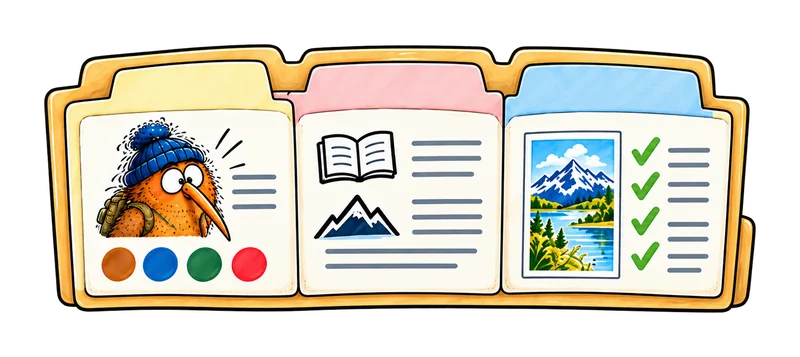
CharacterOS is Livelier Memories’ framework for turning that creative foundation into a repeatable production approach. It brings approved character references, story rules, voice guidance and content planning into one coherent system.
The approach is human-directed, with generative tools that can help explore visual variations and support production. People remain responsible for creative choices, cultural judgment, factual accuracy, consistency and approval. Generated material still needs review for visual drift, errors and unintended resemblance.
The intended progression is:
Choose our existing character or world → Shape its role around your brand and audience → CharacterOS → Useful content and experiences.
A defined system should make it easier to develop a recognizable character across formats. Whether it actually improves production time, quality or audience response needs to be measured in the work. CharacterOS is not presented here as a scientifically validated intervention.
From 5 Cs to 5 Ms
The 5 Cs describe what we develop in a character. The 5 Ms describe the opportunities we explore with it. Together they form Livelier Memories’ creative and business framework, not a scientifically validated five-factor model.
- Characters: recognisable personalities with clear roles.
- Comics: stories that give characters something useful or enjoyable to do.
- Companionship: a familiar fictional presence across an experience, without replacing human relationships.
- Curiosity: questions and discoveries that invite exploration.
- Conservation: care for the natural world, expressed through relevant, reviewed stories and activities rather than unsupported impact claims.
Conservation is a canonical part of our approach. Its expression should be relevant to the audience and setting, with reviewed stories and activities rather than claims of environmental impact without evidence.
We then connect these creative foundations to five possible outcomes: Memories, Marketing, Merchandise, Monetization and Meaning. There is no fixed one-to-one correspondence between the Cs and Ms, and none guarantees a commercial return.
Memories
Create moments people may want to remember: a discovery, a shared joke, a photograph or a story connected to a visit.
Marketing
Give campaigns an identifiable creative presence across films, social content, guides and seasonal communications. Test whether the audience remembers the brand as well as the character.
Merchandise
Develop objects that make sense for the character and occasion: an activity book, collectible print, useful travel item or thoughtfully designed keepsake. Product quality and real demand matter more than putting a face on everything.
Monetization
Explore commercial possibilities such as merchandise, licensed uses or paid experiences where rights, demand and economics support them. Revenue depends on execution, distribution, pricing and costs. A character does not guarantee profit or automatically create protected intellectual property.
Meaning
Give the character a useful relationship with the people and place it represents. That might involve local discovery, shared pride or learning. The people concerned should help define what meaningful participation looks like.
Why begin with travel and destinations
Travel offers a practical starting point because the visitor journey includes anticipation, arrival, exploration and remembering afterward. A character could connect those moments without repeating the same message.
Imagine a coastal destination character introducing a pre-trip story, guiding an accessible harbor activity and appearing on a keepsake after the visit. This is an illustrative concept, not a claim about a completed client project.
The same approach can extend to an existing sports mascot between fixtures, a retail character with a useful product-discovery role, or an education mascot supporting a clearly defined activity. In education, learning outcomes must be tested separately from enjoyment. In every setting, the character should serve the audience and the real experience.
Measure the response, not just the output
A useful pilot begins with a question and a baseline. For example: do visitors exposed to the character correctly recognize the destination later, compared with a suitable alternative?
Depending on the goal, measures could include:
- Correct brand association and confusion with competitors.
- Immediate and delayed recall.
- Understanding of the intended information.
- Voluntary participation and return engagement.
- Production time, revision effort and consistency.
- Sales, costs and contribution margin when testing a commercial offer.
Use fair comparisons where feasible, account for differences in audience and distribution, and record negative responses too. Likes, impressions and asset counts cannot on their own establish lasting memory, community or incremental revenue.
Frequently asked questions
What is Character and Mascot Science?
Character and Mascot Science is Livelier Memories’ evidence-informed creative framework for applying research on recognition, stories and audience relationships to characters and mascots. It guides design decisions and testing; it does not guarantee a particular response.
Do public mascot success stories prove that mascots increase sales?
No. A case may document recognition, usage, participation or product sales without isolating what the character caused. Look for the exact outcome, evidence type and comparison before applying the lesson to another brand.
Why do brands use mascots?
A mascot can provide a recognizable visual identity and a recurring personality for communication. Its usefulness depends on audience fit, correct brand association, execution and sustained, relevant use.
Do characters need to look human?
No. An animal, object or abstract form can have a clear role and recognizable personality. Humanlike appearance is neither necessary nor a guarantee of emotional connection. The design should fit the audience and purpose.
Can an existing mascot become a character universe?
Yes. Start by understanding its established identity, audience associations and permitted uses. New stories, expressions and formats should preserve what people recognize while giving the character useful new roles.
Do generative tools replace creative direction?
In the Livelier Memories approach, generative tools support a human-directed process. People define the character, evaluate outputs and approve what is used. Faster generation does not remove the need for judgment or quality control.
Does creating a character guarantee sales or ownership rights?
No. Commercial results require testing. Rights depend on the work, source material, agreements and applicable law. Commissioning, licensing and production decisions need appropriate rights review rather than assumptions about automatic protection.
Build a character people have a reason to remember
Choose one of our existing characters or worlds, and we bring it to life for your audience — with stories, content and companions that help people connect, return and remember you.
We can begin with the character, the audience and the moments that matter.